

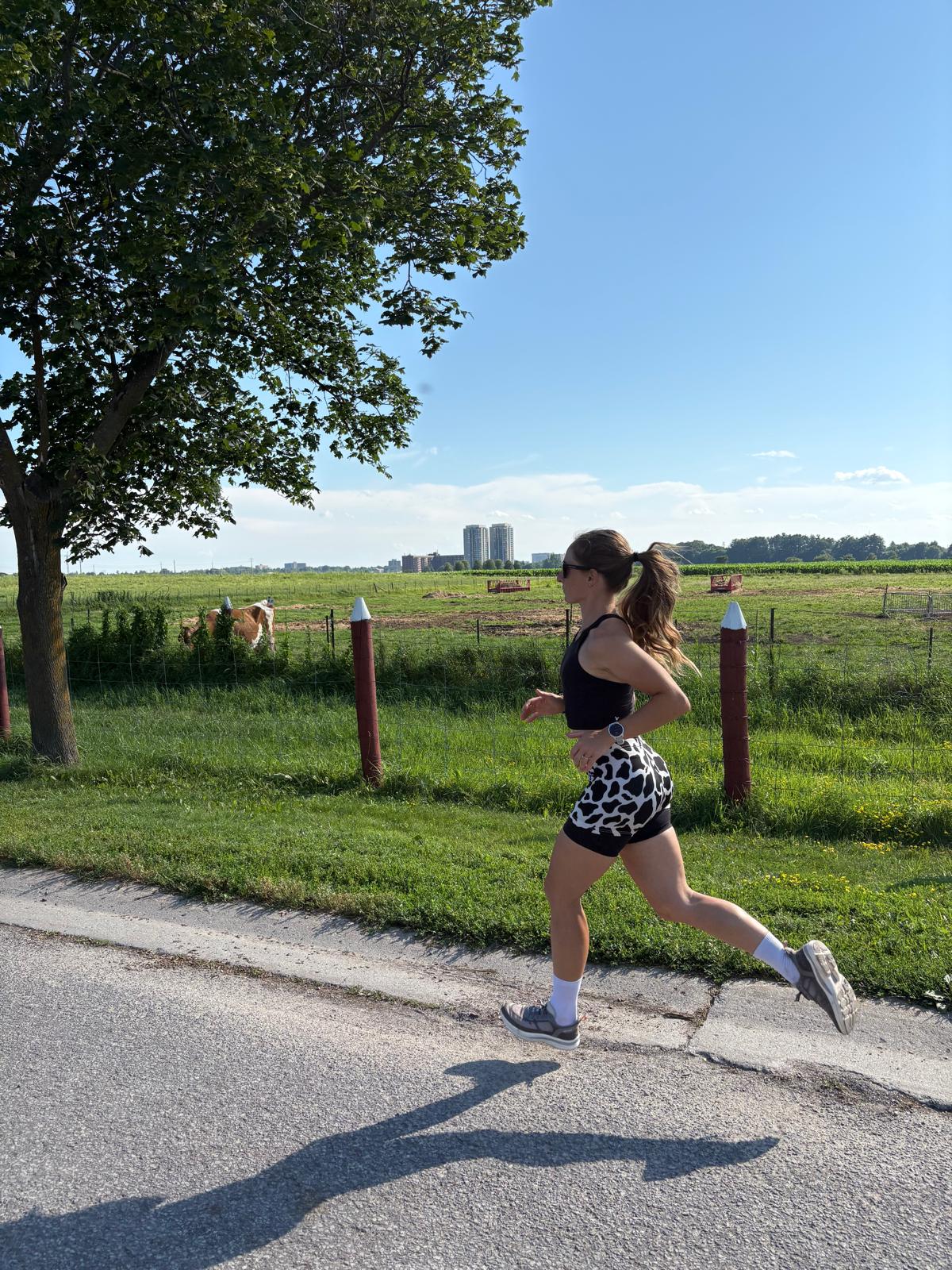
Ironman Training Gives You, Well… You
By Tess Johnston-Iafelice
I stumbled through the front door after a 150-kilometre ride, followed by an entirely unnecessary 3-kilometre brick run. It wasn’t supposed to be a brick day. I just felt good, so I kept going.
As I kicked off my running shoes (far too impatient to untie them) I yelled into the abis (wondering if my husband was even home or not), “I’m going to try to be showered and fed by two. I’m volunteering later."
A call from the other room responded with, “Great. What time is it now?”
I looked down at my watch.
2:02.
I am training for the 2026, Ottawa full Ironman taking place August 2nd. This type of endurance training has a funny way of warping your perception of time, and well, everything else for that matter.
People love telling you how awful Ironman training must be. I hear it at races, at run clubs, at coffee shops, family dinners and evenings with friends.
“I could never do that.” “Who would want to?” “Sounds terrible.” “How do you manage all that training?”
The truth is… I don’t manage it, it manages me.
It gets me outside when I’d rather stay in bed. It gives my weeks structure, my mind clarity, and my body purpose. It’s become the anchor point around everything else. Not because I have to train, but because I genuinely get to.
And that’s a privilege I never want to lose. A craving I hope is never satiated.
Of course, there are lows.
Like riding 120 kilometres only to have your husband mention afterward that your tri suit is completely see-through. Suddenly, I realize that man who pulled over three separate times trying to tell me something probably wasn’t trying to kidnap me after all.
But endurance sport gives far more than it takes.
It gives you proof that you’re capable of far more than you ever imagined. It teaches you that your limits are usually just made-up negotiations you’ve been having with yourself. Most surprisingly though this (typically) individual sport offers endless community.
There’s an unspoken camaraderie in endurance sports that warms my heart and sinks me deeper into it.
During a recent local 15K race that I was treating as a training run, another runner and I unexpectedly settled into the same pace around the 2-kilometre mark. We didn’t exchange names. We didn’t even exchange words. But every time he drifted ahead by a few steps, there’d be a quick glance over the shoulder to make sure we were still there, running in tandem.
Neither of us knew the other’s goal.
It didn’t matter. A sly thumbs up silently asking “are you okay” while reassuringly stating “you got this”.
For seventy-five minutes we quietly pushed each other. A shared responsibility of unspoken pace partners, two strangers making each other stronger by simply refusing to let the other fall behind.
That’s running. That’s triathlon. That’s Ironman. That’s endurance.
Or my aunt offering to ride 90 kilometres beside me on her e-bike just so I don’t have to train alone. It’s other athletes sharing taper advice when your confidence starts to wobble and you question if you’re doing enough (how can we ever be doing enough?). It’s someone you haven’t seen since high school installing tri-bars on your bike, just motivated by seeing others succeed and chase big goals. It’s Canadian running shoe brands that see the potential in females in sports, and actively work to make their experience better. Or my favourite, my husband joining for long runs so I can multi-task my 32 kilometers on pavement while nailing down our next five year plan (a typical Sunday morning).
The community is as powerful as the training itself. And those are just a few moments amongst endless examples.
You do it alone, but you’re never alone.
One thing that has changed more than I expected is my relationship with gear.
Years ago, I bought running shoes based on two criteria: whichever pair was on sale, or whichever came in the cutest colour.
Oh, how I have changed (thank goodness).
After countless kilometres, I’ve learned that the right shoe isn’t just about the sale rack. It’s about staying healthy enough to keep showing up tomorrow. Finding Hettas completely changed the way I think about running. Instead of squeezing my feet into whatever looked good, I finally found shoes that actually worked for me. They fit my stride, keep me comfortable through long training blocks, and let me focus on running instead of thinking about my feet, or knees, or shins. Before Hettas I had accepted that I was a good swimmer, who enjoyed biking and would tolerate running. Now I’m a triathlete, looking to complete my first full Ironman this August with excitement. Hettas took the pain and uncertainty out of my relationship with running and I cannot wait to see how much they (and I) can endure.
Back in 2019, I couldn’t run three kilometres without stopping.
Now, I’m training for a freaking Ironman.
Those same people who can’t imagine doing an Ironman ask me if I’m excited for the race to finally be over. The training to stop. To have my time back, my life, my days, my energy. But this has become my life, in the most wonderful, full and beautiful way.
Honestly? I love an event, but the race was never really the point. The training always was.
Because somewhere between the sunrise swims, the endless rides, the brick runs, the camaraderie, the embarrassing moments, and the thousands of kilometres, I realized training gives me far more than it ever asks for in return.
Ironman training has a funny way of warping your perception of time, of place, of distance, of resilience, of commitment. It teaches you that the only skill necessary is endurance, and if you learn to endure, you, my dear, can become unstoppable.

Read more
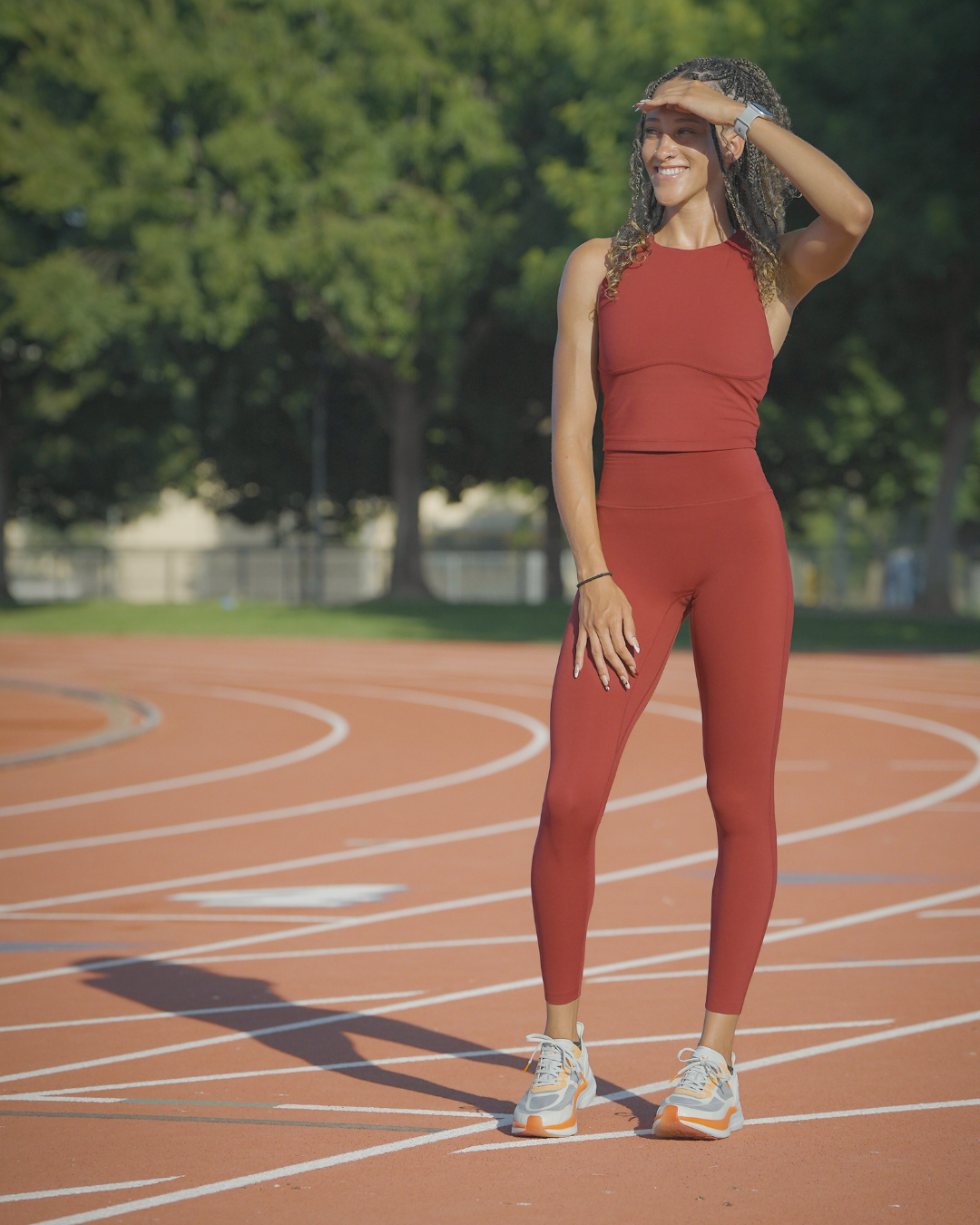
Ceonna is a Fresno-based sprinter that holds five program records at Fresno State, has been a semifinalist at both the 2024 U.S. Olympic Trials and the 2025 USATF Outdoor Championships, ...
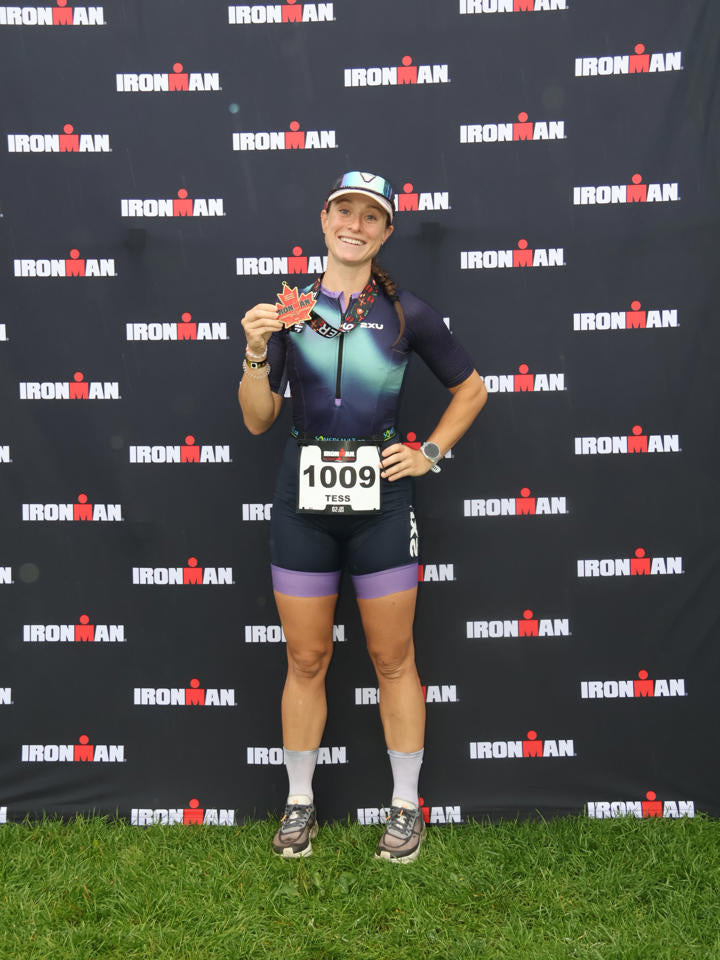
A 3.8 km swim in a thunderstorm. 180 km on the bike. A full road marathon in pouring rain. Tess Johnston-Iafelice crossed the Ironman finish line in Ottawa — and her Hettas went every step of the way.