

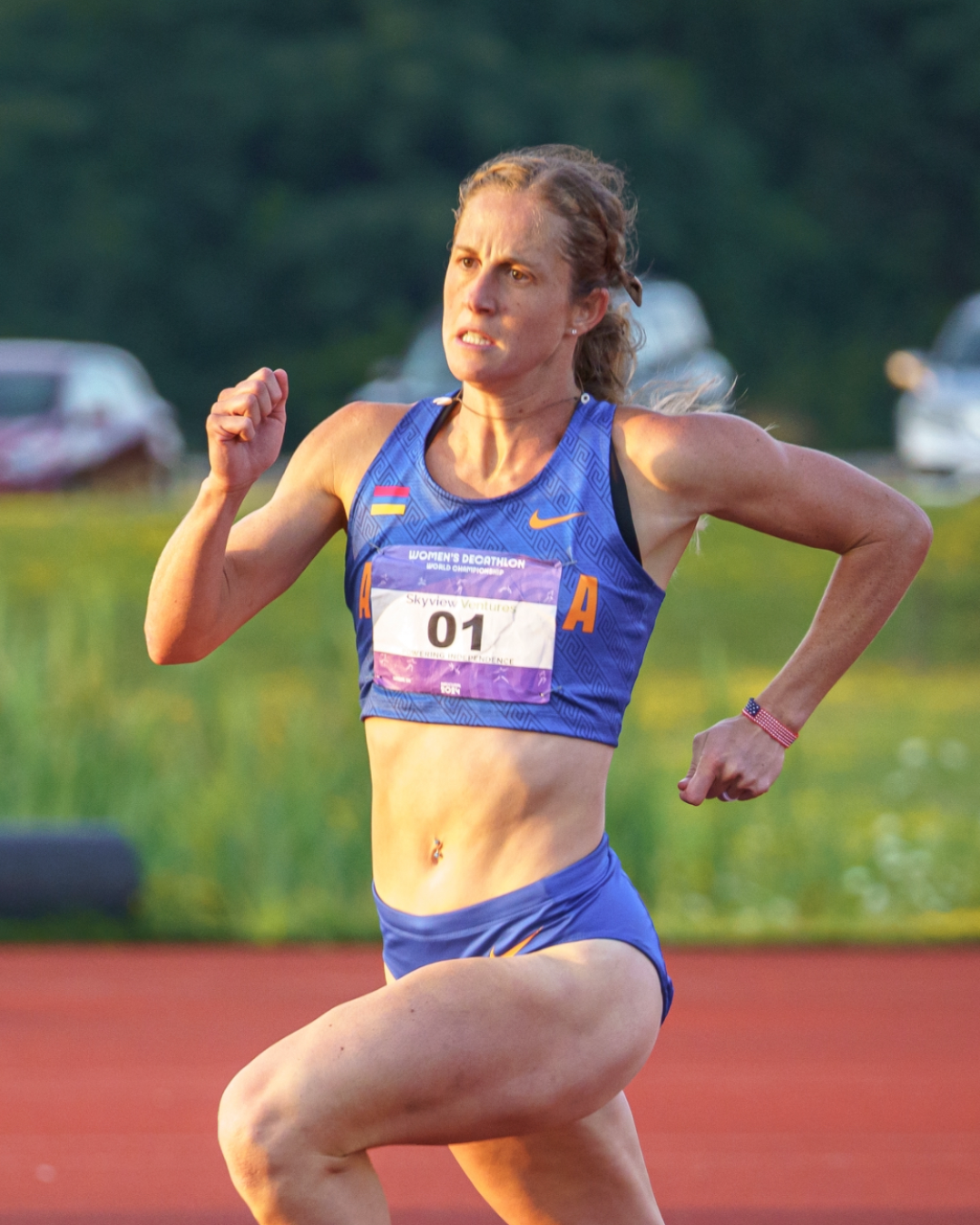
PICKUPS with Allison Halverson
Allison Halverson made history at the inaugural Women's Decathlon World Championship — winning it outright with 7,236 points, her young son cheering from the sidelines.
A former 3-time NCAA All-American at San Diego State, Allison has since represented Armenia — her mother's homeland — setting multiple national records across the 100m hurdles, 400m, pole vault, and decathlon. She's also a mother of one with a second on the way, and one of the most vocal advocates for the Women's Decathlon.
Read her story below.
How does running make you feel?
I love running as a multi-eventer. The running events were always my best from short sprints to long distances. When you are at your peak running shape you truly feel like a superhero.
Name a woman who inspires you.
Many women inspire me, especially the women who become moms and then come back and compete in the sport. One of them is my neighbor and now a very close friend of mine, Amy Acuff. Amy is a 5x Olympian in the High Jump for the US, an entrepreneur, and was my personal acupuncturist keeping me healthy after I became a mom. Amy also had her first child in 2010 and then made her 5th Olympic team in 2012. She and her husband Ty Harvey, a former professional pole vaulter, are the ones who helped coach me and believed in me en route to winning the World Championships in the Decathlon. She is an incredible and hard-working mom and I hope to be half as cool as her when I get older.
What’s something you thought you couldn’t do, but did?
I never thought I would compete in a multi again especially a Decathlon after having my son in 2022. I was not training in events anymore and was only training in speed and hurdles. But then the opportunity caught my eye and I trained for three weeks in all the different events, and not only did I finish the decathlon, but I won it! Now I am a big advocate for women to be competing in the Decathlon in the Olympics and for it to replace the Heptathlon. Women can do all 10 events like the men, so why are we still only doing 7?
How would you celebrate a new PB?
Anytime I get a PB the first thing I always do is thank Jesus! And then soak in the moment of knowing that my faith and hard work led me to achieve a new accomplishment! Then I definitely celebrate with a sweet treat after dinner with my family.
You’re at peak difficulty of a workout, race, or run—what one thought keeps you going?
In hard workouts or a fast race what keeps me pushing harder is knowing that my strength is being one of the best in a hard workout or fast race. I tell myself to rise to the occasion and being such a veteran in the sport I take it upon myself to push the pace and lead the way. I like to be in charge.
Which Hettas are you currently training in?
I’ve been loving my black Alma Tempo’s but I can’t wait to wear the Alma Cruise next. The shoes are soft and comfortable and fit my feet perfectly. I love to run and lift in them. They also go with all my workout outfits.
Congratulations on your groundbreaking victory at the first-ever International Women’s Decathlon. What motivated you to take on this new challenge, and what did it mean to you to be part of such a significant moment in the advancement of women’s sport?
I’ve followed the Women’s Decathlon movement for years and always hoped to do one before retiring. This year, I was training for the 400m and 400m hurdles and even won the Armenian National Championship in the 400m. Although I didn’t qualify for the Olympics in the 400m or 400m hurdles, I was initially selected to represent Armenia through the white card rule. I had started training in the 100m and was announced as part of the Olympic team, but a few weeks before the Games, I was replaced. It was heartbreaking, especially after seeing my name listed as an Olympian and preparing for Paris — a lifelong dream suddenly taken away. A few days later, I saw the post about the Women’s Decathlon and felt excited again. The timing was just right — I was already in shape, and even though I hadn’t trained for some of the events, I jumped in. With the help of amazing coaches and my family, I went all in. Competing felt joyful and freeing, and being part of the first Women’s Decathlon World Championship was incredibly meaningful. I truly believe the decathlon will eventually replace the heptathlon, and I’m proud to be part of that push for equality.
You’ve had an impressive career in the heptathlon and have now added the decathlon to your accomplishments. What were the biggest adjustments or challenges you faced in making that transition? And in your view, why is it important to champion the inclusion of the women’s decathlon on the global stage?
From a training and competing perspective, it requires the same level of conditioning and you need to be very diligent with your nutrition and hydration before and during. For me, the biggest adjustments were learning the pole vault and discus. Pole Vault is such a unique, challenging, and scary event to learn! Discus looks easy but it was so much harder for me to learn because it’s a rotational event which is different than how I throw the shot put! I was frustrated I didn’t do better in the discus, but I was still trying to learn the event.
The women’s decathlon deserves inclusion because men and women should compete in the same events. Women didn’t do the same multi-event as the men throughout history for sexist reasons like “women not being strong enough to Pole Vault”. Well, it turns out we are strong enough, so it’s time to end the nonsense thinking that women can’t do all 10 events! We can still honor the Heptathlon’s legacy and the greats like Jackie Joyner-Kersey, but let's start a new chapter that allows women to be truly equal with men in our respective events.
Congratulations on your second pregnancy! As a soon-to-be mother of two and a professional athlete, what aspects of the current sports landscape do you feel could better support athlete mothers? And what advice would you offer young athletes navigating motherhood alongside a high-performance career?
Training professionally is already a major financial challenge — especially in less popular sports like track and field. To be among the top 24–48 athletes in the world, full-time training is often essential, but that’s incredibly difficult when you have to work a job just to support yourself. On the flip side, many athlete families are living on a single income while spending $10–20K annually just to compete. Add in daycare, which can cost $1.5–2K a month, and you’re easily looking at $30K+ a year — and most athletes simply don’t make enough to cover that. I’d love to help provide more direct support in the future — whether that’s for living expenses, food, supplements, or travel — to help moms stay in the game. Whether through grants or programs, even being able to support just one or two moms a year could make a meaningful difference.
From a personal perspective, my two biggest pieces of advice are: lean on your support system and adjust your expectations. You and your spouse need to be fully onboard with the sacrifices required to pursue your athletic dream. My husband’s support, emotionally, financially, and practically, has been essential. I know not everyone has that, and I admire the women who make it work on their own — but having someone equally committed to your goals can be a game-changer.
Also, you simply can’t train like you did before having a child. Time becomes limited and precious. Workouts may happen during nap time, get interrupted, or include comforting a crying child between reps. While other athletes are resting between intervals, you might be sprinting across the track to soothe your little one. It’s not easy, but it’s doable. I’ve learned that quality matters more than quantity, and being adaptable has helped me continue competing at a high level while also being a mom.
Read more
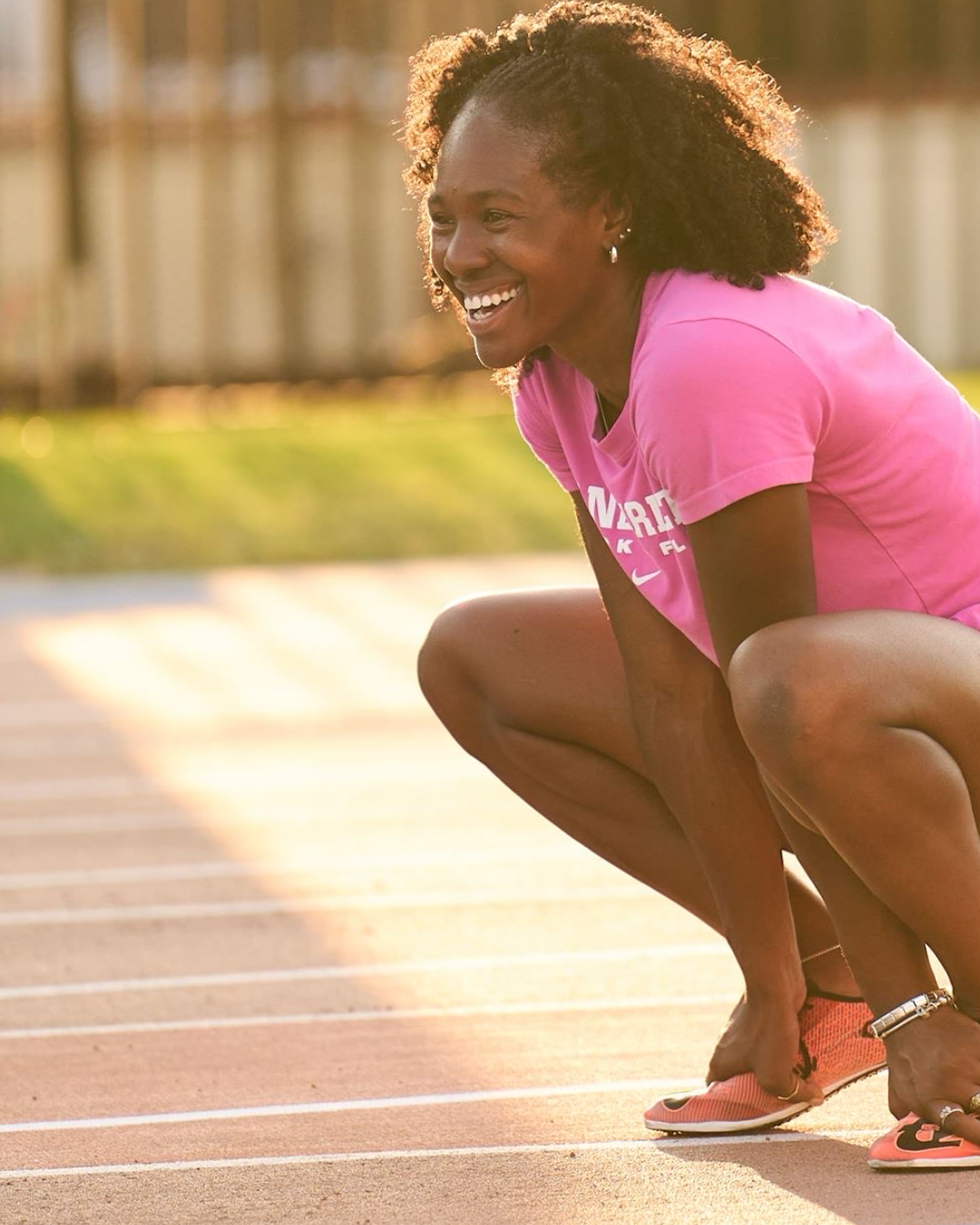
Youth Olympic bronze. World U18 bronze. Pan-American Games gold. Brandee has the hardware — and she's not done yet. Read what drives her.
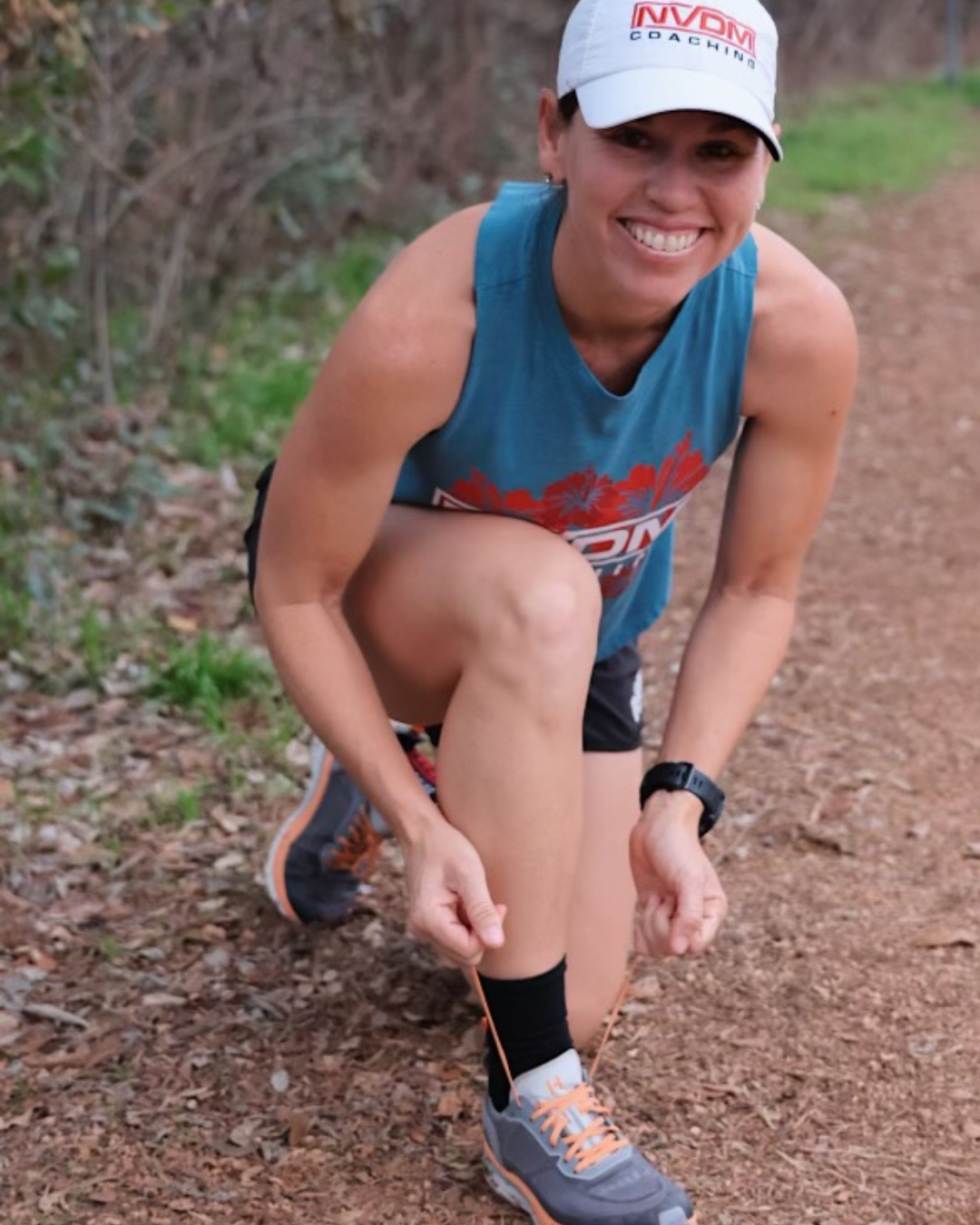
Natasha van der Merwe was South Africa's top-ranked junior tennis player before discovering triathlon — a pivot that launched a decade-plus of elite professional competition. Since 2009, she's coac...